The Story we tell about the Dog
 Dog People Evolution Team
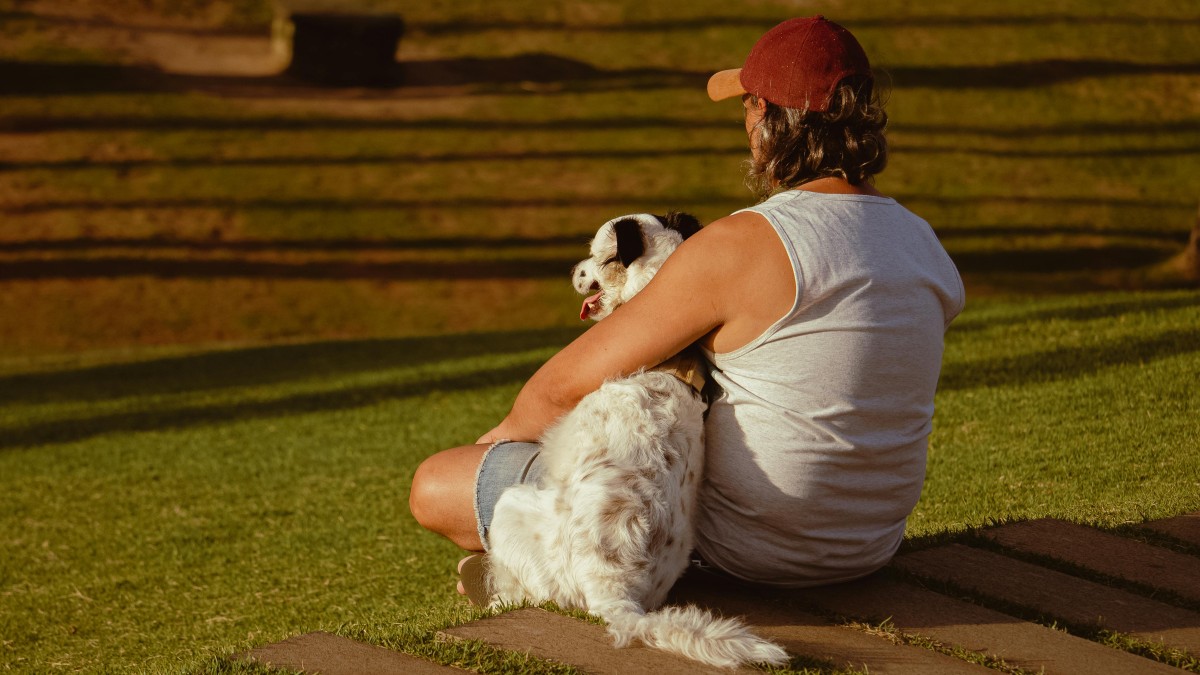
We interpret a dog in different ways. One person might see something another sees in a different way. We put labels on behaviors and that limits us.
The Story We Tell About the Dog
What do you see when you look at your dog?
A confident dog?
A stubborn one?
A sensitive soul?
It feels like we’re describing something real. Something objective. As if we’re simply observing what’s there.
But what if that’s not entirely true?
In the conversation inside Dog People Evolution, Tess Erngren touches on something subtle - but powerful:
We don’t just see dogs.
We interpret them.
Two People, One Dog—Two Different Realities
Imagine two people watching the same dog.
The dog hesitates before approaching a stranger.
One person says:
“She’s insecure.”
Another says:
“She’s thoughtful.”
Same dog. Same moment.
Completely different story.
And those stories matter.
Because the story you tell determines what you do next.
If you believe the dog is insecure, you might try to build confidence.
If you believe the dog is stubborn, you might apply more pressure.
If you believe the dog is calm and observant, you might give them more space.
The behavior didn’t change.
But the response did.
When Interpretation Becomes “Truth”
The challenge is that our interpretations don’t feel like interpretations.
They feel like facts.
We say:
“He is reactive.”
“She is dominant.”
“He is anxious.”
And once we label it, we stop questioning it.
But those labels are shaped by something.
Our past experiences.
Our education.
The dogs we’ve lived with before.
The methods we’ve learned.
In other words:
We don’t just see the dog.
We see the dog through ourselves.
The Risk of the Wrong Story
Sometimes, the story we tell helps.
But sometimes, it limits us.
If we assume a dog is being “difficult,” we might respond with frustration.
If we assume a dog is “disobedient,” we might focus on control.
If we assume a dog “knows better,” we might expect more than they can give.
And when the story is off - even slightly - the outcome often is too.
Because we’re solving the wrong problem.
A Different Approach
What if we held our interpretations more lightly?
What if instead of saying:
“This is what the dog is,”
we asked:
“What else could be true here?”
That shift creates space.
Space to observe more carefully.
To stay curious.
To adjust as we learn more.
Because the goal isn’t to eliminate interpretation.
It’s to stay aware that we are interpreting.
Seeing More Clearly
Understanding dogs isn’t just about learning more techniques.
It’s about learning to see more clearly.
To recognize the stories we bring into each situation.
To question them when needed.
To remain open to being wrong.
Because sometimes, the biggest shift doesn’t come from changing what we do -
It comes from changing how we see.
👉 This perspective - and the deeper discussion behind it - is explored in the full Dog People Evolution conversation with Tess Erngren and Andy Hale here: https://dogpeopleevolution.newzenler.com/courses/nqyryoru
Or, if you want to join our membership DPEx(perience) Safe Space and meet for our monthly Community Hour, you can find it here: https://dogpeopleevolution.newzenler.com/courses/dpe-safe-space-member