The Day Someone Rolled Down Their Car Window
 Dog People Evolution Team
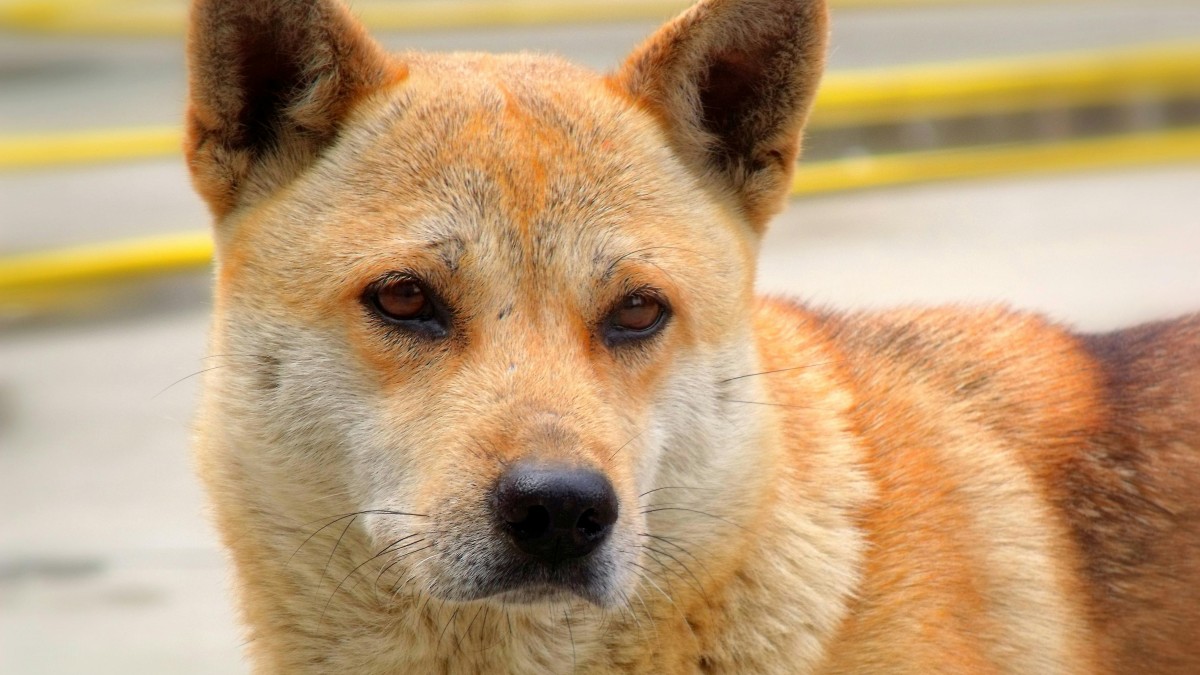
How a simple question changed the entire way of working for a dog trainer.
The Day Someone Rolled Down Their Car Window
Sometimes the biggest turning points in our lives don’t come from books, seminars, or formal education.
Sometimes they come from a stranger.
A brief moment.
A few words.
And then they’re gone.
But the impact stays with you for years.
During a Dog People Evolution conversation with researcher Katriina Tiira and ethologist Karolina Westlund, host Matt Beisner shared one of those moments - a simple encounter that quietly changed the course of his life as a dog trainer.
Seventeen Years Into the Work
By the time Matt reflected on the story, he had already spent nearly two decades working with dogs.
He describes himself as what many trainers call a “crossover trainer.”
In the early years, like many people entering the field, he followed the training methods he saw popularized on television. Those approaches shaped how he thought about leadership, obedience, and control.
Back then, the goal was simple.
A well-trained dog was a dog that did what you asked.
And if a dog didn’t respond, the solution was to apply more pressure.
That mindset felt normal at the time. It was widely accepted. Many trainers believed it was the right way to work with dogs.
Then one ordinary walk changed everything.
Walking His Jindo
Matt was walking his Korean Jindo - a dog who had already taught him many hard lessons.
This wasn’t an easy dog.
The Jindo had a serious bite history. On the Dunbar bite scale, the dog had reached level five bites on humans and level six on other dogs - the highest level of aggression. Living and working with this dog demanded constant awareness.
On this particular day, the dog was wearing a choke chain.
When they reached the sidewalk, Matt asked the dog to sit.
The dog didn’t.
In Matt’s mind at the time, that refusal meant something important. He believed that for a dog to respect him - and for him to feel respectable as a trainer - the dog needed to comply.
So he corrected the dog with a quick pop of the leash.
The dog looked at him.
Almost as if asking a question.
Why would you do that?
But Matt didn’t see it that way in the moment.
He corrected the dog again.
And that’s when something unexpected happened.
A Car at the Stop Sign
A woman had pulled up to a stop sign nearby.
She had been watching.
She rolled down her car window.
Looked at Matt.
And said something very simple.
“That looks like that hurts.”
Then she drove away.
That was it.
No lecture.
No argument.
No confrontation.
Just a quiet observation.
And then she was gone.
A Seed That Stayed
Matt says he has never forgotten that moment.
Even years later, when he tells the story, the memory still moves him deeply.
At the time, the woman had no way of knowing what effect her words would have.
She didn’t stay to debate training methods.
She didn’t try to prove she was right.
She simply said what she saw.
But those few words planted a seed.
A small moment of reflection.
And that seed eventually grew into something much larger.
The Power of a Gentle Interruption
Looking back, Matt doesn’t just remember what the woman said.
He remembers how she said it.
She didn’t shame him.
She didn’t accuse him.
She didn’t try to dominate the situation.
She simply pointed out something he hadn’t fully allowed himself to see.
And then she trusted him to think about it.
That kind of interaction is rare - especially in a world where people often respond to disagreement with criticism or hostility.
But sometimes, quiet compassion carries more influence than confrontation.
A Different Kind of Trainer
Over time, Matt’s approach to working with dogs began to change.
Instead of focusing on control and compliance, he started asking different questions.
One question in particular became central to his work:
How can I relieve pressure?
Pressure on the dog.
Pressure on the owner.
Pressure on the relationship between them.
Because when pressure decreases, something important happens.
Dogs can think more clearly.
People can learn more easily.
And communication becomes possible.
The Moments That Shape Us
The woman in the car probably doesn’t remember that day.
For her, it may have been a small moment in the middle of an ordinary afternoon.
But for Matt, it became a turning point.
One of those quiet experiences that gradually shifts how you see the world.
And perhaps the most remarkable part of the story is this:
Today, Matt says he wants to be that person.
The one who notices.
The one who speaks up with kindness.
The one who plants a seed that might help someone see things differently.
The Lesson for the Dog World
The dog world often focuses on big breakthroughs.
New training systems.
New research.
New techniques.
But sometimes change begins in a much smaller place.
A single conversation.
A moment of empathy.
A stranger rolling down a car window and offering a simple observation.
We rarely know when we are part of someone else’s turning point.
But when we approach dogs - and the people who love them - with curiosity and compassion, those moments become possible.
A Conversation Worth Hearing
Matt shared this story during a deeper conversation with Katriina Tiira and Karolina Westlund at the Dog People Evolution 2025 conference.
The discussion explores not only how we understand dogs, but how we communicate with each other as dog professionals, researchers, and owners.
It’s the kind of conversation that can quietly change the way you think.
If you’d like to watch the full discussion and explore more conversations like this, you can get access to the entire conference and join the Dog People Evolution Safe Space membership here: https://dogpeopleevolution.newzenler.com/courses/membership-conference
Because sometimes the biggest changes begin with something very small.
Just a window rolling down - and someone willing to say a few honest words.